amazon 1p vs 3p

Choosing the right selling model on Amazon is one of the most strategic decisions ecommerce businesses can make in 2026. With millions of active buyers and thousands of product categories, Amazon offers two primary ways to sell: Amazon 1P vs 3P. These two models differ fundamentally in how products are sold, who controls pricing, how inventory is managed, and how revenue flows back to your business. Understanding these differences clearly can have a dramatic impact on profitability, operational complexity, and long-term brand growth.

As Amazon continues evolving both fulfillment systems and marketplace policies, choosing between 1P and 3P is no longer just about sales volume — it’s about strategy, margin management, and brand ownership. This guide will break down everything you need to know to confidently decide which model is right for your business in 2026.

At TechEcom, we specialize in done-for-you Amazon store services. Our expert team manages everything—from product research and listing optimization to inventory and fulfillment—so you can enjoy the benefits of Amazon selling without lifting a finger. Discover why we’re considered the best Amazon automation services provider for sellers looking to scale effortlessly

What Is Amazon 1P Selling?

picture showing amazon 1p model

Amazon 1P selling, also known as first-party (1P) selling, refers to a wholesale relationship where you sell your products directly to Amazon, and Amazon then resells them to end customers on its marketplace. In this model, Amazon essentially acts as the retailer, while you act as the supplier or vendor.

What 1P Means in Practice

Under the Amazon 1P model, your business receives purchase orders (POs) from Amazon for specific products and quantities. Once you accept a PO, you ship inventory to Amazon’s warehouses, and Amazon takes ownership of the products. After that point, Amazon controls pricing, fulfillment, shipping, returns, and customer service for those products.

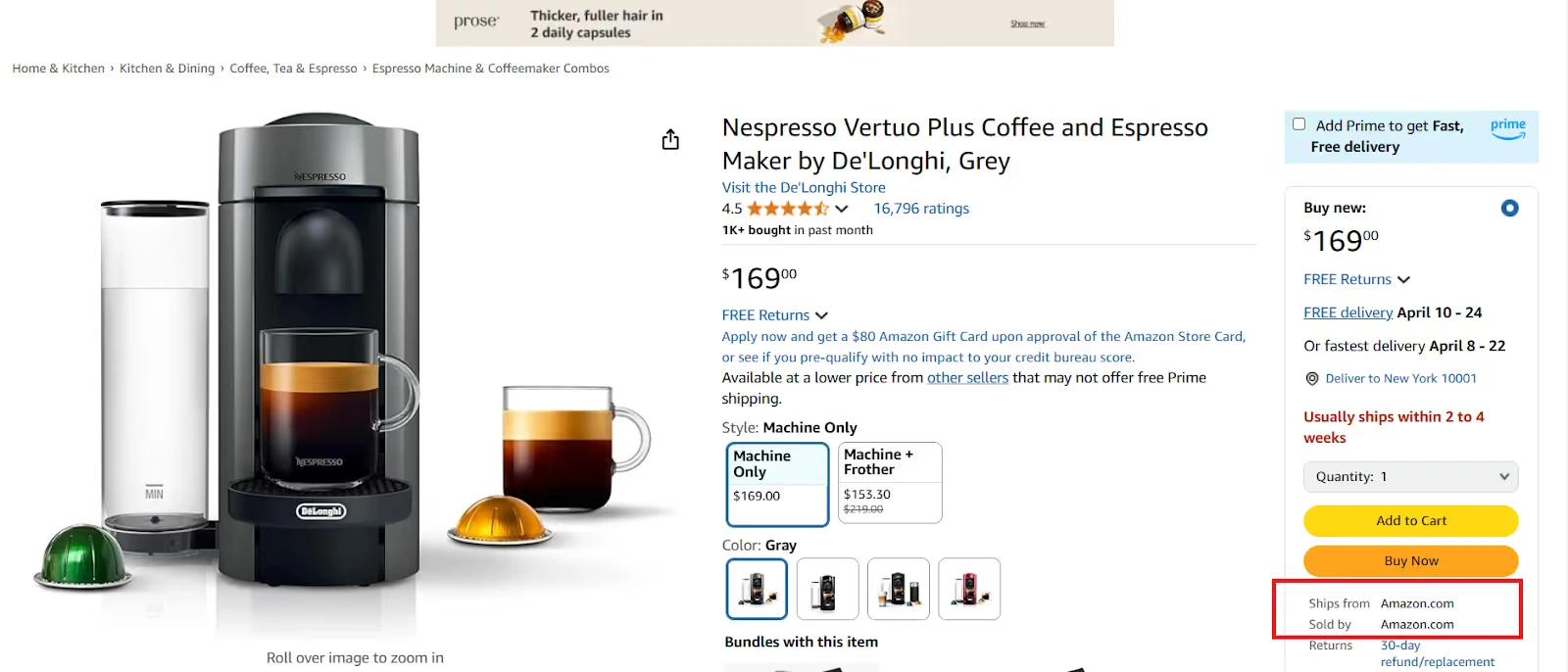
Products sold through Amazon 1P typically display the Ships from and sold by Amazon.com tag on their product detail pages — a powerful signal of trust for many buyers and one of the major advantages of this model.

How Amazon 1P Works (Vendor Central)

The 1P selling relationship is invite-only — brands or manufacturers cannot simply sign up for Vendor Central like they can for the marketplace. Instead, Amazon’s vendor team must extend an invitation based on factors such as product performance, market demand, and brand strength. You then use the Vendor Central portal to view POs, manage shipments, submit invoices, and access certain analytics and marketing tools.

Once a purchase order is fulfilled:

  • Amazon becomes the retailer of record and owns the inventory.

  • Amazon sets the retail price based on its algorithms and strategic pricing decisions.

  • Amazon handles customer fulfillment, returns, and customer service.

This can simplify order processing and logistics on your end but also means giving up control over important aspects of the selling process.

Key Features of Amazon 1P Selling

Retailer Control:

Amazon controls product pricing, marketplace promotions, and buy box eligibility for items sold under 1P. While this can streamline operations, it also means less control over retail strategies and pricing decisions by the seller.

Wholesale Model:

Rather than selling to the customer directly, you sell in bulk to Amazon at wholesale rates. Amazon then resells to the end consumer. This differs from the typical marketplace model where an individual seller lists and sells directly to customers.

Inventory and Fulfillment:

Once inventory is shipped to Amazon under a PO, Amazon manages warehousing, picking, packing, shipping, and customer returns. This creates a more hands-off experience for the supplier but also hands more control to Amazon.

Payment Terms:

In most 1P arrangements, Amazon pays vendors on extended payment terms — commonly Net 30, Net 60, or Net 90 days — after the invoice is submitted and reconciled. This affects cash flow planning and requires suppliers to manage working capital accordingly.
Learn what Amazon Best Sellers Rank means, how it’s calculated, and how BSR influences product visibility and sales.

What Is Amazon 3P Selling?

picture showing amazon 3p model

Amazon 3P selling — short for third-party selling — refers to the model where you sell your products directly to customers through Amazon’s marketplace, instead of selling wholesale to Amazon itself. In this arrangement, your business retains ownership of inventory until the end customer buys it, and you use Amazon Seller Central to manage listings, pricing, fulfillment, and customer interaction.

How Amazon 3P Works

In the 3P model, sellers register an Amazon seller account on Seller Central, where they can upload products, create listings, set prices, and manage inventory. There’s no invitation requirement, meaning almost any business can start selling as 3P once they meet Amazon’s registration criteria.

Once a product is listed:

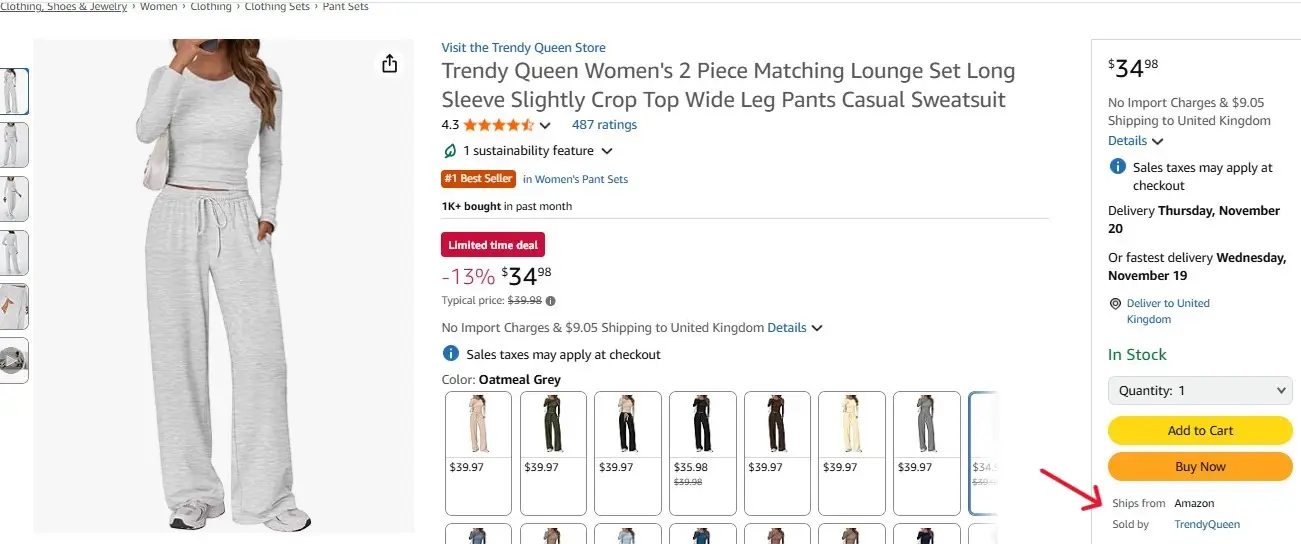
  • The product appears on Amazon’s marketplace with a label like Sold by [Your Store] and sometimes “Ships from and sold by Amazon” if using Fulfillment by Amazon (FBA).

  • The seller controls pricing, inventory levels, promotions, and overall listing content.

  • Orders can be fulfilled either by the seller directly (Fulfillment by Merchant, FBM) or by Amazon’s fulfillment network (Fulfillment by Amazon, FBA).

This direct-to-customer selling model is what most people think of as selling “on Amazon.” It enables brands and small businesses to reach Amazon’s massive customer base without surrendering control of their products or brand strategy.

Control Over Your Business

One of the biggest hallmarks of 3P selling is control. Unlike Amazon 1P sellers (vendors), 3P sellers determine:

  • Product pricing: Sellers can set and adjust prices dynamically based on competition, demand, or promotions.

  • Inventory planning: You decide how much inventory to send to Amazon or keep for FBM.

  • Fulfillment strategy: You choose between FBA, FBM, or hybrid approaches like Seller Fulfilled Prime (where eligible sellers handle shipping but still qualify for Prime benefits).

  • Marketing & advertising: 3P sellers access Amazon’s ad platforms, brand stores, and promotional tools to boost visibility and sales.

This high degree of control makes 3P a versatile option for many sellers — from established brands to solo ecommerce operators — and helps them shape customer experience from first click to delivery.

Fulfillment Options in Amazon 3P

Fulfillment heavily influences operational workload and cost structure:

Fulfillment by Amazon (FBA)

  • Sellers send inventory to Amazon fulfillment centers.

  • Amazon handles picking, packing, shipping, returns, and customer service.

  • Buyers often get Prime-eligible shipping, improving conversion rates.

Fulfillment by Merchant (FBM)

  • Sellers store, pack, and ship products themselves or through a third-party logistics (3PL) partner.

  • Seller handles customer service and returns (unless using Amazon support options).

Some sellers also qualify for Seller Fulfilled Prime (SFP), where they handle fulfillment in a way that still qualifies for Prime shipping guarantees. This hybrid option can be useful for sellers who want control but also need Prime visibility.

Pricing, Fees, and Revenue Flow

In the 3P model, sellers retain the retail price received from customers, minus Amazon’s referral and fulfillment fees.

  • Amazon charges a referral fee on each sale, usually a percentage of the sale price.

  • If FBA is used, additional fulfillment fees apply based on product size, weight, and storage duration.

Unlike 1P, where Amazon purchases inventory wholesale from you and pays on set terms (often Net-30 to Net-90), 3P sellers receive their sales proceeds on a regular payout schedule (typically every 7–14 days), helping with cash flow planning.

Who Uses Amazon 3P Selling?

Amazon 3P selling is ideal for a wide range of businesses:

  • Small and medium-sized enterprises (SMEs) that want direct access to Amazon’s marketplace without large upfront commitments.

  • Private label and brand owners who want full control over pricing, inventory, and brand presentation.

  • Entrepreneurs and ecommerce businesses who want flexibility in fulfillment and marketing strategies.

In fact, 3P sellers account for a majority of Amazon’s marketplace sales — over half of all paid units — highlighting how dominant this model has become in recent years.

Explore proven Amazon product research methods to identify profitable, high-demand, low-competition products before launching.

Pros and Cons of Amazon 1P vs 3P

Selling through Amazon 1P (Vendor Central) can be a powerful option for brands and manufacturers who want Amazon to act as the retailer of their products. However, it comes with both significant advantages and notable trade-offs. Below is a comprehensive and professional look at the pros and cons of 1P selling based on industry research and Amazon seller ecosystem insights.

Pros of Amazon 1P Selling

Amazon Buys Your Inventory in Bulk

One of the biggest advantages of 1P selling is that Amazon purchases your products wholesale through purchase orders (POs). This means your business moves large volumes of inventory quickly, which can help stabilize production planning and revenue forecasting.

“Sold by Amazon” Boosts Trust and Visibility

Products listed under the Ships from and Sold by Amazon.com tag benefit from strong customer trust, often leading to higher conversion rates, improved buy box chances, and greater discoverability in search results.

Simplified Operational Burden

Because Amazon assumes responsibility for fulfillment, customer service, returns, and logistics, 1P sellers can focus on supply and production while Amazon handles day-to-day retail operations. For many brands, this hands-off model simplifies scaling.

Access to Enhanced Marketing Tools

Vendor Central often grants access to advanced marketing tools like A+ Content, Amazon Marketing Services (AMS), and promotional placements that can increase visibility and sales — even outperforming some 3P features.

Potentially More Predictable Demand

With regular POs placed by Amazon’s retail team, some vendors experience more predictable sales cycles for key SKUs, reducing risk compared to reactive marketplace fluctuations.

As a 1P seller, your products are automatically eligible for Amazon Prime and two-day shipping.

Cons of Amazon 1P Selling

Loss of Pricing Control

In a 1P arrangement, Amazon has the final say on retail pricing — meaning your product may be discounted aggressively, even below your Minimum Advertised Price (MAP). This can lead to channel conflict and eroded profit margins.

Lower Profit Margins

Because you sell to Amazon at wholesale prices rather than retail, vendors often earn smaller margins compared to selling directly to customers via 3P. Amazon’s pricing strategy and discounting algorithms further contribute to this effect.

Longer Payment Terms Affect Cash Flow

Unlike 3P sellers who receive payouts every 7–14 days, 1P vendors typically get paid on extended terms such as Net 30, Net 60, or even Net 90. These longer payment cycles can strain cash flow, especially for smaller brands.

Reduced Control Over Brand and Inventory

Amazon’s control extends beyond pricing — it also manages listings, product detail pages, and inventory decisions. This can result in limited brand consistency and the inability to pivot quickly on list content or promotions.

Potential for Hidden Fees

While the Vendor Central fee structure isn’t always transparent, vendors can incur chargebacks, co-op fees, marketing contributions, and other deductions that eat into profitability. These can be complex to track and manage.

Reliance on Amazon’s Buying Decisions

Amazon’s algorithm and category managers decide when and how much to reorder. If your products don’t meet Amazon’s internal performance thresholds, the company might reduce POs, slow reorder cadence, or even stop buying entirely — leaving you without a sales channel.

Invitation-Only Access

Unlike 3P, where anyone can sign up for Seller Central, 1P selling through Vendor Central is invite-only and often reserved for brands with proven sales history or strategic value to Amazon. Access isn’t guaranteed.

Discover top wholesale product categories for Amazon in 2026, including trends, demand insights, and profitability considerations.

Pros of Amazon 3P Selling

When it comes to choosing a selling model on Amazon, many businesses find that Amazon 3P (third-party selling) through Seller Central offers flexibility and control that the traditional 1P model doesn’t provide. However, this comes with responsibilities that can impact your time, costs, and operations. Below is a professional, detailed look at the key advantages and disadvantages of Amazon 3P selling in 2026.

Full Control Over Pricing and Branding

One of the biggest benefits of selling as a third-party seller is pricing autonomy. You set your own product prices, allowing you to react quickly to market demand, competitor pricing, and promotional opportunities — instead of relying on Amazon to determine retail prices. This control also extends to branding and listing content, enabling consistent brand messaging across your catalog. You have creative control over your Amazon storefront

Higher Profit Margin Potential

Because 3P sellers sell retail direct to consumers, they often keep a larger share of the revenue compared to wholesale pricing in the 1P model. With proper pricing strategies, many sellers find that their profit margins can be significantly higher than in a Vendor Central arrangement.

Flexible Fulfillment Options

3P selling offers multiple fulfillment pathways:

  • Fulfillment by Amazon (FBA) — Amazon handles storage, shipping, and customer service.

  • Fulfillment by Merchant (FBM) — You or your logistics partner handles fulfillment.

  • Seller Fulfilled Prime (SFP) — Offers Prime-eligible shipping while you fulfill orders yourself.
    This flexibility lets you tailor your fulfillment strategy to your business needs and margins.

Accessible to Most Sellers

Starting as a 3P seller is relatively straightforward: you can open a Seller Central account without an invitation, making this model accessible to small businesses, entrepreneurs, and established brands alike.

Broader Market Reach

Through Seller Central, you can sell in multiple Amazon marketplaces worldwide, participate in programs such as Amazon Global Selling, and expand your brand’s footprint internationally while managing everything from a single account. Within Seller Central, 3P sellers have access to a wide range of advanced selling tools and sales reports to support brand growth on Amazon; however, some features are available only through Brand Registry.

Product Listings

There is no limit to the number of products a third-party (3P) seller can list on Amazon. With 1P, however, Amazon may choose not to purchase or carry certain products.

Cons of Amazon 3P Selling

Operational Complexity

As a 3P seller, you’re responsible for your entire business operation on Amazon — including inventory planning, order fulfillment (unless using FBA), customer service, returns, and compliance with Amazon policies. This can be time-intensive and complex, especially for newer sellers.

Amazon Marketplace Fees

While there is no wholesale discount to Amazon, 3P sellers pay a range of fees — including referral fees, subscription fees, and Fulfillment by Amazon (FBA) fees when applicable. These costs can accumulate and impact profitability if not managed carefully.

Responsibility for Customer Service and Policies

Under 3P, sellers must handle customer inquiries, returns, performance metrics, and compliance. Poor handling in these areas can lead to negative reviews or even account suspension, which directly affects sales and reputation.

Intense Competition

The Amazon marketplace is highly competitive, and third-party sellers must contend with numerous competitors — including Amazon itself and other 3P sellers in the same category. Winning the Buy Box and maintaining visibility can require advanced pricing and advertising strategies.

Inventory Management Risks

If you use FBA, there are long-term storage fees and potential stock-outs that can eat into profit margins or result in lost sales. Conversely, with FBM, you must maintain efficient logistics and delivery performance to meet Amazon’s standards.

Policy and Performance Pressure

Amazon closely monitors seller performance metrics such as late shipments, order defect rates, and customer feedback. Failing to meet these thresholds can trigger warnings or account suspension.

Whether you choose Amazon 1P or 3P, running a store can be complex. With TechEcom’s Amazon FBA automation services, we handle the entire process for you. From setup to sales, our done-for-you store solutions give you peace of mind while maximizing your revenue.

How To Become An Amazon 1P Seller?

Becoming an Amazon 1P seller (vendor) isn’t like signing up for Seller Central — you can’t apply directly for Amazon’s first-party program. Vendor Central is invite-only, which means Amazon must reach out to you and send an invitation before you can join.

Here’s what you need to know:

Establish a Strong Brand and Sales Record

Amazon typically invites brands that demonstrate:

  • Consistent sales performance

  • High customer demand and positive reviews

  • A reliable supply chain
    Brands with strong market presence and consistent performance on Seller Central are more likely to attract Amazon’s attention.

Grow Visibility and Market Demand

You can increase your chances of being noticed by:

  • Maintaining excellent sales metrics and inventory levels

  • Building strong external brand visibility (website, social proof, distribution)

  • Participating in trade shows or industry events where Amazon retail buyers may scout new products.

Network with Amazon’s Retail Team

Since invitations are sent by Amazon’s retail or vendor management team, networking can help:

  • Reach out via LinkedIn to Amazon category or brand managers

  • Contact Amazon Vendor Central support to express interest

  • Attend industry events where Amazon is present.

Wait for the Official Invite

Once Amazon decides your brand is a good fit, they’ll email an invitation to join Vendor Central. Only after accepting this invite can you begin onboarding as a 1P seller.

Key Notes

  • There is no public application or sign-up form for Vendor Central — it’s only by invitation.

  • Even with strong sales and brand performance, there’s no guarantee Amazon will invite you.

In short, to become an Amazon 1P seller you must attract Amazon’s interest through strong marketplace performance, brand strength, and proactive engagement — and then wait for Amazon to offer you the invite.

How to Become an Amazon 3P Seller?

Define Your Business Model and Strategy

Before beginning, clarify:

  • What products you will sell

  • Whether you will use Amazon fulfillment (FBA) or self‑fulfill

  • Your pricing and competitive positioning

  • Your brand differentiation and long‑term goals

This strategic foundation will guide all subsequent decisions. Long‑term success on Amazon requires more than listing products — it requires operational discipline and scalable infrastructure.

Choose the Appropriate Selling Plan

Amazon offers two core selling plans:

  • Individual Plan – No monthly subscription; $0.99 fee per item sold (plus referral fees). Best for low‑volume sellers.

  • Professional Plan – $39.99 monthly subscription (no per‑item fee) with advanced selling tools, bulk uploads, and Buy Box eligibility. Recommended for serious sellers and scalable businesses.

Selecting the right plan upfront ensures you are positioned for growth and access to key marketplace features.

To become a certified Amazon 3P seller:

  1. Visit Amazon Seller Central and begin registration.

  2. Provide business information (legal name, business address).

  3. Submit contact information, including a valid phone number for verification.

  4. Enter bank account details to receive payouts.

  5. Complete tax information as required by your jurisdiction.

Amazon conducts identity verification before activating accounts. Timely and accurate information is essential to avoid delays.

Ensure Product Eligibility

Products must comply with Amazon’s category permissions and policy requirements:

  • Some categories may be open to all sellers

  • Others require approval or professional selling status

  • Certain products must comply with regulatory and safety standards

Amazon evaluates product eligibility as part of the listing process, and failing to meet compliance can delay or block your listing.

Set Up Your Seller Profile

Your Seller Profile is a public representation of your business. A professional profile includes:

  • Your brand story and values

  • Clear return and shipping policies

  • Customer service commitment details

This profile builds trust and differentiates you in a crowded marketplace.

List and Optimize Your Products

When listing products, ensure:

  • Accurate product identifiers (UPC, EAN, ASIN, SKU)

  • High‑quality images and compelling titles

  • Keyword‑rich descriptions and bullet points

  • Optimized backend search terms

Optimization is critical because Amazon’s internal search algorithm determines product visibility based on relevance and performance.

Choose a Fulfillment Strategy

You have two fulfillment options:

  • Fulfilled by Amazon (FBA) – Amazon handles storage, packing, shipping, and customer service. FBA products can qualify for Prime delivery, improving conversion rates and customer trust.

  • Fulfilled by Merchant (FBM) – You manage inventory, shipping, and returns. This can reduce fees but increases operational responsibility.

Evaluate your logistics capabilities, cost structure, and customer service capacity before selection.

Maintain Strong Operational Performance

Your seller performance is monitored on key metrics such as:

  • Order defect rate

  • On‑time shipment performance

  • Customer response time (within 24 hours)

  • Returns and refunds handling

Consistently meeting performance targets helps maintain account health and Buy Box eligibility.

Managing an Amazon business doesn’t have to be stressful. TechEcom, a leading Amazon automation company, provides full-service done-for-you Amazon store management. Our team optimizes listings, handles fulfillment, and ensures your store runs smoothly—all while you focus on growth.

Can You Sell as Both Amazon 1P and 3P?

The short answer is yes — a brand can operate under both Amazon 1P (first‑party/vendor) and Amazon 3P (third‑party/seller) models simultaneously. This dual‑channel approach is often referred to as a hybrid selling strategy and is used by many brands to balance control, visibility, and revenue opportunities on the Amazon platform.

Can You Be Both a 1P Vendor and a 3P Marketplace Seller?

Yes — you can operate both 1P and 3P channels concurrently, and many brands adopt this hybrid approach for strategic reasons. This is particularly useful when:

  • Amazon doesn’t purchase enough inventory under 1P, leaving stock gaps.

  • You want to maintain control over certain products or test new items before inviting Amazon to buy them wholesale.

  • You want to leverage the strengths of each model — for example, Amazon’s retail reach for core SKUs under 1P, and pricing control or testing flexibility under 3P.

This hybrid strategy allows a company to use Vendor Central for some products and Seller Central for others, or sometimes even move SKUs between models as performance evolves.

Benefits of a Hybrid (1P + 3P) Strategy

A dual approach can create several advantages:

Flexibility in Inventory & Fulfillment
If Amazon doesn’t buy all your stock through Vendor Central, you can still fulfill orders through Seller Central to prevent out‑of‑stock issues.

Strategic Product Testing
New products or niche items can be launched on Amazon using the 3P model first to gather customer demand data before seeking 1P purchase orders.

Diverse Margin Opportunities
3P selling typically offers stronger control over pricing and margins, while 1P can offer volume and predictable orders without operational fulfillment effort.

Comprehensive Market Coverage
Hybrid selling lets you choose the optimal channel per SKU — leveraging the best attributes of each (retail exposure from 1P and branding & control from 3P).

Operational Considerations and Risks

While hybrid selling is possible and widely practiced, it requires careful planning:

  • Catalog and account management complexities: You must manage listings across two separate platforms (Vendor Central and Seller Central) and ensure consistency in product data and pricing.

  • Amazon policies may limit overlapping ASINs: In some cases, Amazon may restrict a brand from listing the same ASIN under both models, especially when conflicting interests emerge.

  • Potential channel conflict: Listing the same products under both models can lead to pricing or buy box complications if not managed strategically.

Because of these factors, hybrid selling tends to work best for brands with strong operational capacity and clear strategic goals.

Amazon 1P vs 3P: Which Is Better for You?

When selling on Amazon, businesses must choose between two fundamentally different models:

  • Amazon 1P (Vendor Central): You sell wholesale to Amazon — Amazon becomes the retailer.

  • Amazon 3P (Seller Central): You sell directly to Amazon customers through the marketplace.

Both models have strengths and trade‑offs. The “better” option depends entirely on your business goals, operational capabilities, and priorities.

Core Differences

Control & Branding

  • 1P: Amazon controls retail pricing, promotions, and often listing content — you lose retail decision‑making authority.

  • 3P: You set prices, run promotions, control listing content, and maintain your brand experience.

Winner for control & brand: 3P

Accessibility

  • 1P: Invitation‑only — Amazon chooses brands based on demand and supply reliability.

  • 3P: Open to most qualifying sellers without invitation.

Winner for accessibility: 3P

Profit Margins & Pricing

  • 1P: Wholesale pricing often results in lower margins since Amazon negotiates prices and discounts.

  • 3P: You retain retail pricing control, which can lead to higher margins per sale.

Winner for margin potential: 3P

Fulfillment & Operations

  • 1P: Amazon handles fulfillment, shipping logistics, and returns — reducing operational workload.

  • 3P: You manage inventory and fulfillment (or use FBA), plus customer service unless you outsource it.

Winner for operational simplicity: 1P
But at the cost of control.

Cash Flow

  • 1P: Payment terms often range from 30–90+ days, slowing cash flow.

  • 3P: Amazon pays 3P sellers roughly every two weeks, improving cash flow.

Winner for cash flow: 3P

Data & Insights

  • 1P: Limited access to customer and keyword data without premium analytics tools.

  • 3P: Robust analytics including sales performance, search terms, and customer behavior.

Winner for insights: 3P

Who Should Choose Which Model?

Choose Amazon 1P (Vendor Central) if:

You are an established brand or manufacturer with strong wholesale distribution.
You want hands‑off sales and logistics.
You value large bulk purchase orders and predictable Amazon orders.

Ideal for: Large enterprise brands focusing on volume and less on retail control.

Choose Amazon 3P (Seller Central) if:

You want pricing and brand control.
You want faster payments and cash flow.
You want full access to customer insights and analytics.
You are prioritizing long‑term profitability and flexibility.

Ideal for: Small to mid‑sized brands, direct‑to‑consumer (DTC) businesses, and sellers who want control of the retail process.

Quick Summary

Feature 

Amazon 1P (Vendor)

Amazon 3P (Seller)

Relationship

You are a wholesale supplier to Amazon.

You are the retailer selling directly to consumers.

Control

Less control over pricing and branding; Amazon sets the final price.

Full control over pricing, branding, and listings.

Profit Margins

Typically lower, wholesale margins.

Potential for higher, retail margins.

Logistics

Amazon handles all fulfillment, customer service, and returns.

Seller handles logistics or uses FBA (Fulfillment by Amazon).

Eligibility

Invitation-only.

Open to all sellers.

Payment Frequency

Slow (30‑90+ days)

Fast (bi‑weekly)

Branding

Products appear as “ships from and sold by Amazon.com,” which can boost customer trust.

Seller manages their brand presence, which requires more effort to build trust.

There’s no one-size-fits-all answer. The best choice between Amazon 1P and 3P depends on your business goals, resources, and strategy — always do your own research before deciding.

Want to sell on Amazon without the hassle? TechEcom offers best amazon FBA automation services, where we take care of every detail. From sourcing products to handling logistics, our done for you amazon store solutions let you enjoy automated income with zero operational effort.

Conclusion: Amazon 1P vs. 3P

Deciding between Amazon 1P and 3P is not just about selling — it’s about control, profitability, and long-term strategy. 1P offers operational simplicity and bulk orders, while 3P provides pricing control, higher margins, and direct customer access. Many brands even adopt a hybrid approach to leverage the strengths of both. Ultimately, there’s no one-size-fits-all solution — carefully assess your business goals, resources, and market strategy, and always do your own research before choosing the right model.

FAQ's: Amazon 1P vs. 3P

Amazon 1P (Vendor Central) means you sell wholesale directly to Amazon, and Amazon sets retail pricing and handles fulfillment. Amazon 3P (Seller Central) means you sell directly to customers on Amazon’s marketplace, retaining control over pricing, inventory, and branding.

Decide based on your goals, resources, and priorities. Choose 1P if you want bulk orders and hands-off logistics. Choose 3P if you prefer pricing control, higher margins, and direct customer access. Evaluate your business model and operational capacity carefully.

Yes, brands can adopt a hybrid strategy, selling some products via 1P and others via 3P. This approach combines the benefits of both models but requires careful management to avoid conflicts in pricing, inventory, and listings.

Contact Us for Tailored Solutions – TechEcomm:

Ready to transform your Amazon store and achieve big wins? Contact us at TechEcomm for personalized solutions that leverage the power of automation for your business. Reach out to us at (302) 216-4540 or via email at info@techecomm.com. Sign up and Embark on the path to e-commerce success with TechEcomm – where small changes lead to big wins!

[gravityform id="16" title="true"]
[gravityform id="11" title="true"]
[gravityform id="15" title="true"]
[gravityform id="9" title="true"]
[gravityform id="8" title="true"]
[gravityform id="4" title="false" ajax=“true”]
[gravityform id="3" title="false" ajax=“true”]

Error: Contact form not found.