That pile of unused items sitting in your home isn’t just clutter—it could be the starting point of a profitable online business. While many sellers focus on models like private labeling or wholesale, there’s a much simpler and often overlooked opportunity: selling used items on Amazon.
With millions of active shoppers browsing Amazon every day, there’s constant demand for affordable, pre-owned products—from books and electronics to tools and household items. Instead of letting these items go to waste, sellers are turning them into steady income streams, whether as a side hustle or a scalable business.
What makes selling used items on Amazon different from other marketplaces is the platform’s emphasis on quality and trust. Buyers expect accurate product conditions, reliable shipping, and a professional buying experience. This higher standard is exactly why many customers prefer Amazon when purchasing used goods—giving sellers a strong advantage if they follow the right approach.
The best part? You don’t need a large upfront investment to get started. Many successful sellers begin by flipping items they already own or sourcing low-cost products locally, making it one of the most accessible entry points into ecommerce.
In this guide, you’ll learn how to sell used products on Amazon step by step—from understanding Amazon’s rules to listing your first item and scaling your sales effectively.
Your Path to E-Commerce Success Starts With TechEcom
TechEcom builds, automates, and scales your eCommerce store across Amazon, Walmart, and Shopify — handling everything from product research and listings to daily order fulfilment and customer service. You focus on passive income. We handle the rest.
Trusted by sellers across the USA · Zero daily involvement · Results-driven automation
At TechEcom, we specialize in done-for-you Amazon store services. Our expert team manages everything—from product research and listing optimization to inventory and fulfillment—so you can enjoy the benefits of Amazon selling without lifting a finger. Discover why we’re considered the best Amazon automation services provider for sellers looking to scale effortlessly.
Selling used items on Amazon: What’s allowed and what’s not
If you’re just getting started, learning selling used items on Amazon can be one of the easiest ways to enter the marketplace. It allows you to understand how Amazon works without investing heavily in new inventory. Many beginners—and even experienced sellers—use this model to generate additional income by selling pre-owned or lightly used products.
However, it’s important to understand that not every product can be sold as “used” on Amazon. The platform has clearly defined category rules to maintain product quality and customer trust. Knowing where you can and cannot sell used items is a crucial first step.
Categories That Allow Used Items
Amazon provides a wide range of categories where selling used items is permitted. Some of the most popular ones include:
- Amazon Device Accessories
- Amazon Kindle Products
- Books
- Camera & Photo Equipment
- Cell Phones & Accessories
- Consumer Electronics
- Home & Garden
- Industrial & Scientific
- Major Appliances
- Music, DVDs & Blu-ray
- Musical Instruments
- Office Products
- Outdoor & Sports Equipment
- Personal Computers
- Pet Supplies
- Software
- Tools & Home Improvement
- Video Games
Keep in mind: Some subcategories within these may require approval before you can list items.
Categories That Do NOT Allow Used Items
While Amazon supports resale in many areas, certain categories are restricted due to safety, hygiene, or authenticity concerns. These include:
- Baby Products (except clothing)
- Beauty & Personal Care
- Grocery & Gourmet Food
- Health & Household
- Fine Art
- Collectible Coins
- Entertainment & Sports Collectibles
- Toys & Games
- Watches
Key Rule to Remember
In general, Amazon gives sellers plenty of opportunities to sell pre-owned products—but accuracy is critical. When learning selling used products on Amazon, you must:
- Choose the correct category
- List items under the right condition
- Provide honest and detailed product descriptions
Amazon places a strong emphasis on customer experience, so misrepresenting a product or listing it in the wrong category can negatively impact your seller account.
Understanding Amazon’s Used Condition Guidelines
When learning how to sell used items on Amazon, one of the most important factors that directly impacts your sales and customer satisfaction is how you classify the condition of your products. Amazon has strict condition guidelines, and following them accurately is essential to avoid returns, negative reviews, or account issues.
Amazon’s Used Condition Categories
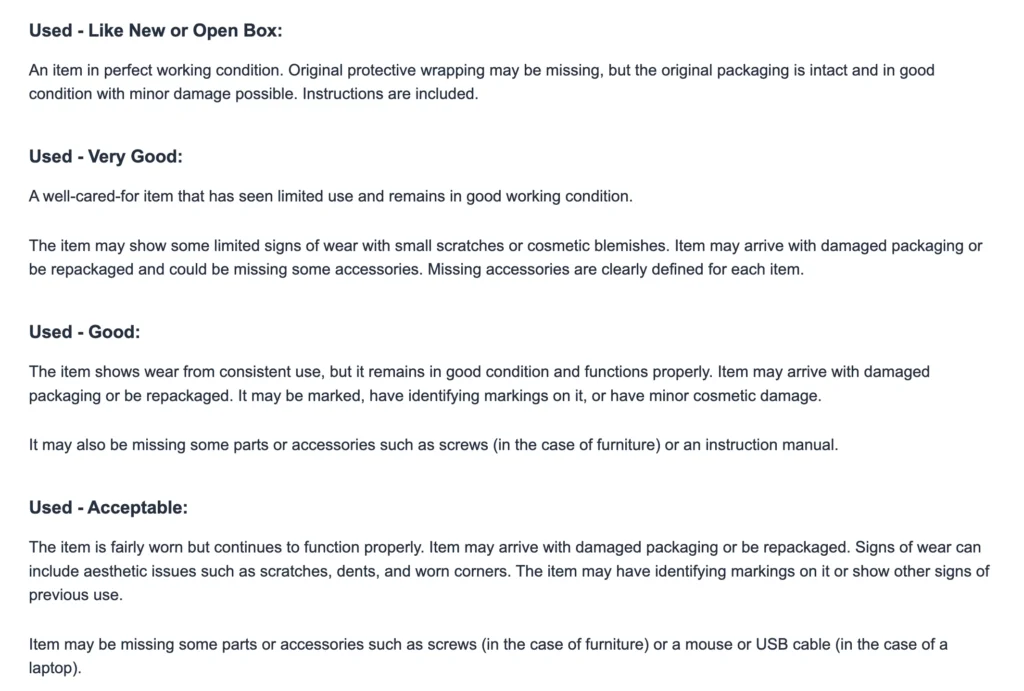
Amazon divides used products into four main condition types. Choosing the right one ensures you set proper expectations and build trust with buyers.
- Used – Like New or Open Box: Perfect working condition. Packaging may be missing or damaged, but the item is pristine, with all accessories and instructions included.
- Used – Very Good: Well-cared-for, limited use, functions perfectly. May show minor cosmetic wear (small scratches), have damaged packaging, or be missing non-essential accessories.
- Used – Good: Shows consistent use, functions properly. May have moderate cosmetic damage (markings), damaged packaging, and missing non-essential parts/accessories.
- Used – Acceptable: Fairly worn but fully functional. Significant cosmetic issues like dents, scratches, and worn corners are present. Packaging may be missing
Why Condition Accuracy Matters
Properly selecting the condition is critical when selling used items on Amazon. Mislabeling a product—even unintentionally—can lead to:
- Negative customer feedback
- Increased returns and refunds
- Account health warnings or penalties
Amazon’s system is highly customer-focused, meaning buyers expect the product to match exactly what is described. If a customer receives an item in worse condition than expected, it can harm your reputation quickly.
Best Practices for Condition Listings
To succeed, follow these best practices:
- Be Honest and Detailed: Clearly mention scratches, missing parts, or defects
- Use Condition Notes: Add a short description explaining the exact condition of the item
- Include Real Images: Show the actual product, not stock photos
- Underpromise, Overdeliver: Slightly conservative descriptions can lead to better reviews
- Test Functionality: Ensure the item works properly before listing
Let TechEcom Transform Your Online Business — You Bring the Ambition, We Handle Everything Else
TechEcom specialises in building fully automated eCommerce stores across Amazon FBA, Walmart, Shopify, and eBay. Our expert team manages every operational detail — product research, listings, inventory, orders, and customer service — so you earn consistent passive income without the daily grind.
No prior experience needed · Fully managed service · Trusted by US entrepreneurs
What not to sell as used on Amazon
When selling used items on Amazon, you need to be extremely careful about quality and accuracy. Negative reviews can appear quickly if a customer feels that the product they received does not match what was advertised.
There is often very little difference between Amazon’s used condition categories. Because of this, even a small mismatch can create problems. For example, if you list an item as “Used – Good” but the buyer believes it falls under “Used – Acceptable,” it can lead to complaints, returns, and poor feedback.
To avoid this, it’s always a smart practice to grade your item one level lower than its actual condition. This helps manage expectations and reduces the chances of disputes, while also improving customer satisfaction.
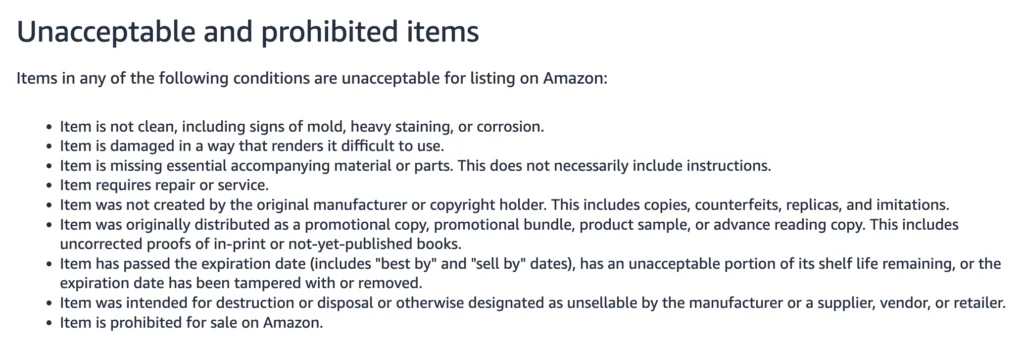
Amazon is also very strict about what can and cannot be sold as used. Unlike other marketplaces, it enforces clear policies to maintain quality and trust. Certain products—especially those related to health, hygiene, or safety—should never be listed as used.
Amazon’s list of restricted and prohibited items is what sets it apart from platforms like eBay. These rules are in place to protect buyers and ensure a consistent shopping experience. As a seller, following these guidelines is essential if you want to build a reliable and long-term business on the platform.
Where to Find Profitable Items to Sell on Amazon
Finding the right products is a critical step when selling used items on amazon successfully. Even the best listing or pricing strategy won’t work if the product itself doesn’t have demand or profit potential. To build a sustainable business, you need reliable sourcing methods that consistently provide undervalued items you can resell for a margin.
Start with Your Own Home
One of the simplest ways to begin is by sourcing products from your own home. Items like old books, unused electronics, kitchen appliances, or tools often have resale value.
This approach requires no upfront investment and helps you understand how Amazon listings, pricing, and fulfillment work. It’s the perfect starting point for beginners who want to learn the process without financial risk.
Online Marketplaces & Local Platforms
When sourcing inventory for selling used items on Amazon, online marketplaces and local platforms can be extremely profitable. Platforms like eBay allow you to find items at competitive prices while verifying their quality before resale. This process, often referred to as “online arbitrage,” involves purchasing products from one online platform and selling them on another—Amazon in this case—for a profit.
Facebook Marketplace is another excellent source for used items, particularly for those looking to source locally. Despite competition from major players like eBay or Walmart, Facebook Marketplace remains one of the most popular online platforms in the U.S. Its appeal lies in the sheer volume of available items and the convenience of browsing from your existing Facebook account. You can quickly filter for quality products, negotiate prices directly with sellers, and often avoid shipping costs by arranging local pick-ups.
This combination of online and local sourcing allows you to diversify your inventory and uncover hidden gems that may not be available in traditional retail channels, giving your Amazon store a unique competitive edge.
Thrift Stores & Garage Sales
Thrift stores, flea markets, and garage sales are goldmines for finding undervalued items. Many products are priced low simply because sellers are unaware of their online value.
You can often find branded electronics, vintage items, or niche products that perform well on Amazon. The key is to quickly research items before purchasing and focus on products with consistent demand.
Liquidation & Bulk Inventory
Liquidation suppliers offer returned, excess, or overstock inventory from major retailers. These products are typically sold at discounted rates, allowing for higher profit margins.
While this method requires more careful inspection and a higher upfront investment, it can be highly profitable if you identify quality items within bulk lots. Many experienced sellers use this strategy to scale their operations.
Step-by-Step Guide: How To Sell Used Items On Amazon
Selling used items on Amazon is a straightforward process, but it requires attention to detail to ensure compliance with Amazon’s rules and maximize your profits. Here’s a step-by-step guide to help you get started.
Step 1: Create Your Amazon Seller Account
The first step is to set up an Amazon seller account. Amazon offers two main account types:
- Individual Account: No monthly fees, but you pay $0.99 per item sold. This option is ideal if you plan to sell only a few used items to test the waters.
- Professional Account: Costs $39.99 per month but eliminates the per-item fee. This is best for sellers handling bulk inventory or planning to scale their used item business.
Starting with an Individual Account is a great way to evaluate profitability. As your sales grow, you can easily upgrade to a Professional Account to take advantage of higher selling limits and additional tools.
Step 2: Decide on Your Fulfillment Method
Amazon offers two primary fulfillment options for sellers:
- Fulfillment by Amazon (FBA): Amazon handles storage, packing, shipping, and customer service. You simply send your used items to their fulfillment center. FBA is convenient for sellers with larger inventories, especially when shipping multiple items at once.
- Fulfillment by Merchant (FBM): You handle storage, packaging, shipping, and returns yourself. FBM can result in higher profit margins since you avoid FBA fees, making it ideal for small-scale sellers or those selling locally sourced used items.
Each method has pros and cons. FBA reduces the workload and improves delivery speed, but fees depend on item size and weight. FBM allows greater control and flexibility but requires hands-on management.
Step 3: Create Your Product Listings
Amazon does not allow duplicate listings for products already on the platform. To list your used items, you need to find the ASIN (Amazon Standard Identification Number), a unique 10-character identifier for each product.
Here’s how to list your used items:
- Go to Seller Central and navigate to the Inventory tab.
- Click Add a Product.
- Enter the product’s ASIN in the search bar.
- Click Sell this Product.
- On the Offer Page, set the product’s condition to “Used” and select the appropriate subcategory (e.g., “Good,” “Very Good,” “Acceptable”). A best practice is to slightly understate the condition to avoid negative feedback.
- Add a Condition Note describing the item’s condition and any imperfections. Transparency builds trust and reduces disputes.
For used books, the process is slightly different. Instead of the ASIN, you use the ISBN (International Standard Book Number), usually found on the back cover or inside pages. For older publications without an ISBN, search by title to locate the correct listing.
Step 4: Optimize Your Listing for Sales
Once your product is listed, make it appealing to buyers:
- Include high-quality images showing the item’s true condition.
- Write a clear and honest description. Highlight any wear, scratches, or missing parts.
- Price your item competitively, considering Amazon fees, shipping costs, and market value.
- Use keywords relevant to your item in the title and bullet points to improve discoverability.
Properly optimized listings increase the likelihood of sales and help you maintain a high seller rating.
Step 5: Monitor Your Inventory and Customer Feedback
Selling used items requires ongoing attention:
- Regularly check your inventory and restock popular items.
- Respond promptly to buyer inquiries and maintain excellent customer service.
- Monitor feedback to address any quality concerns or disputes.
By actively managing your listings and maintaining a reputation for transparency and reliability, you can turn selling used items on Amazon into a sustainable business.
Whether you’re launching your first storefront or scaling your brand, creating an Amazon Storefront can be complex. With TechEcom’s Amazon FBA automation services, we handle everything—from setup and design to optimization and promotion—giving you a fully done-for-you Storefront that drives traffic, builds your brand, and maximizes your sales.
Skip the Learning Curve. TechEcom Builds and Runs Your Profitable eCommerce Store.
Whether you are new to e-commerce or looking to scale without the operational headaches — TechEcom’s expert automation team builds your store, sources winning products, and manages everything daily. All you do is collect your monthly profits.
Days to live store
Target profit margins
Supported suppliers
Platforms we manage
Amazon · Walmart · Shopify · eBay · USA-based team · Proven track record
Pro Tips for Selling Used Products on Amazon
Selling used products on Amazon can be highly profitable, but success requires more than just listing items. By following these pro tips, you can optimize your sales, improve customer trust, and scale your used item business effectively.
Always Be Honest About Product Condition
One of the most important factors in selling used items is accurately describing the condition. Overstating quality or omitting defects can lead to negative reviews, returns, and account suspensions. Amazon provides four standard condition ratings for used items:
- Like New: Practically flawless, fully functional, and comes with original packaging if possible.
- Very Good: Minor signs of wear, fully operational, with no major defects.
- Good: Visible wear, but item is functional and complete.
- Acceptable: Significant wear or cosmetic damage, but still usable.
Pro Tip: When in doubt, list the item one step below its actual condition. This creates realistic expectations and reduces disputes.
Take High-Quality Photos
Images are crucial for convincing buyers to purchase used items. Include multiple angles and close-ups of any imperfections. For electronics, show serial numbers or accessories included. For books or media, display covers, pages, and any annotations.
Pro Tip: Natural lighting works best, and a clean, neutral background makes your product stand out.
Optimize Your Listings with Keywords
Even for used items, discoverability matters. Use relevant keywords in your title, bullet points, and description. Include the brand, model, condition, and notable features. Proper keyword usage helps your listing appear in Amazon search results for interested buyers.
Pro Tip: Research similar listings to see which keywords competitors are using and consider including common search phrases buyers use for your type of item.
Price Competitively
Used items should be priced based on condition, demand, and market competition. Compare your item to similar listings and factor in Amazon fees, shipping costs, and potential returns.
Pro Tip: Slightly undercutting competitors can make your item more attractive, especially for high-demand products.
Offer Fast and Reliable Shipping
Shipping speed influences buyer satisfaction and positive reviews. If you’re using FBM (Fulfillment by Merchant), ensure that packages are shipped promptly and include tracking information.
Pro Tip: Use protective packaging for fragile or high-value items to avoid damage during transit, which can lead to returns and negative feedback.
Leverage Seasonal and Trend Opportunities
Some used items sell better during specific times of the year. Electronics, textbooks, or holiday decorations may see spikes in demand. Track seasonal trends and adjust your inventory accordingly.
Pro Tip: Use tools like Keepa or CamelCamelCamel to monitor price trends and identify peak selling periods.
Build a Strong Seller Reputation
Your reputation on Amazon is key to long-term success. Always respond to customer inquiries promptly, provide accurate descriptions, and resolve issues quickly. Positive reviews lead to higher sales and increased trust.
Pro Tip: Include a polite note in your shipment thanking the customer and providing guidance on leaving feedback. Small gestures improve customer experience.
Is Selling Used Items on Amazon Worth It?
Absolutely. While it may not carry the same margins as private label or wholesale selling, it offers unique advantages:
- Low upfront investment: You don’t need to purchase large quantities of inventory upfront.
- Quick start: You can begin with items around your home or sourced from local and online marketplaces.
- High-demand items: Certain categories like electronics, books, and collectibles maintain strong resale value.
- Learning opportunity: Selling used items teaches essential skills in product research, listing optimization, and customer service that apply to larger-scale Amazon ventures.
Ultimately, selling used items on Amazon is worth it if you approach it strategically. Focus on quality, compliance, and smart sourcing, and your used products can transform from clutter into cash while building a sustainable business in the world’s largest online marketplace.
Conclusion: Selling Used Items on Amazon
Selling used items on Amazon can be a highly rewarding business model for both beginners and experienced sellers. It provides a low-risk entry point into e-commerce, allows you to monetize items you already own, and offers the potential to scale into a profitable side hustle or full-fledged business. By carefully selecting the right products, adhering to Amazon’s rules and condition guidelines, and providing excellent customer service, you can turn used products into a consistent revenue stream.
Want to sell on Amazon without the hassle? TechEcom offers best amazon FBA automation services, where we take care of every detail. From sourcing products to handling logistics, our done for you amazon store solutions let you enjoy automated income with zero operational effort.
Contact Us for Tailored Solutions – TechEcomm:
Running an Amazon store can be overwhelming — managing listings, inventory, orders, and customer service can easily become a full-time job. That’s where TechEcomm’s Amazon FBA Automation Services comes in.
We provide “done-for-you” Amazon store services, so you don’t have to lift a finger. From product sourcing and listing optimization to fulfillment and sales tracking, our system handles everything automatically.
With Amazon Store Automation, you can:
- Launch and run a fully automated Amazon store with minimal effort.
- Earn passive income while our team manages your inventory, listings, and customer orders.
- Optimize profits with smart pricing, promotions, and data-driven inventory management.
- Stop worrying about day-to-day store operations — let us do the work and watch your Amazon business generate revenue consistently.
Ready to turn your Amazon business into a hands-off, income-generating asset? Contact us today at (302) 216-4540 or via email at info@techecomm.com to get started.
Amelia Johnson
Amelia Johnson is an E-Commerce Writer at TechEcomm with over 8 years of experience, working since 2018. She creates high-performing online content for small businesses and large enterprises across platforms like Amazon, Walmart, eBay, and Shopify. Amelia blends SEO strategy, marketplace expertise, and compelling storytelling to help brands grow, convert, and compete in fast-paced digital marketplaces.
Amelia Johnson
Amelia Johnson is an E-Commerce Writer at TechEcomm with over 8 years of experience, working since 2018. She creates high-performing online content for small businesses and large enterprises across platforms like Amazon, Walmart, eBay, and Shopify. Amelia blends SEO strategy, marketplace expertise, and compelling storytelling to help brands grow, convert, and compete in fast-paced digital marketplaces.